Trich and BVD: the two tests that belong in every fall bull and calf program
One is a venereal disease that turns a 92 percent conception rate into 60 and has no treatment. The other is a virus carried by a calf that looks normal and sheds it to every animal it stands next to. Both are found with a cheap test at the chute. Who to test, when, and what to do with a positive.
Oct 19
Screwworm and avian flu get the headlines because they are new and moving. The two diseases that quietly cost more cow-calf operations more money every year are old, boring, and preventable, and both are found with a sample taken while the animal is already in the chute this fall.
Trichomoniasis
What it is. A protozoan, Tritrichomonas foetus, that lives in the sheath of the bull and is passed to the cow at breeding. In the cow it causes early embryonic death, usually between 2 and 4 months, and the cow comes back into heat late or ends up open. The bull shows nothing. The cow shows nothing except the calf she does not have.
What it looks like. A herd that has always bred up at 90 to 95 percent preg-checks at 60 to 75. A string of late calves. Cows that were seen bred in June cycling again in August. The first year it is a mystery; the second year it is the same mystery.
The test. A preputial scraping from the bull, sent for PCR. It is a five-minute job at the chute, costs $30 to $60 a head, and is required by law in many western and Plains states for any non-virgin bull that changes ownership or crosses a state line, and in some states for all bulls on shared or open range. A single PCR is considered sufficient in most states; older culture methods needed three.
What to do with a positive. Cull the bull. There is no approved treatment and he does not clear it. Test every other bull on the place, and cull those too if positive. Cows mostly clear the infection after a few heat cycles, so the standard program is to sell the opens, give the bred cows a 120-day sexual rest from any bull before the next breeding season, and only put clean, tested bulls in. Some herds vaccinate cows, which reduces the losses but does not prevent infection.
Who to test this fall. Every bull, every year, at the same time you do the breeding soundness exam. Any bull you buy. Any bull that was on a fence line with a neighbor's herd. If you lease bulls or run on shared pasture, that is the risk, and the test is how you manage it.
BVD and persistently infected calves
What it is. Bovine viral diarrhea virus, which despite the name is mostly a reproductive and immune disease. When a pregnant cow is infected between roughly 40 and 125 days, the calf can be born persistently infected: it carries the virus for life, sheds enormous amounts of it, and often looks perfectly normal until it does not. One PI calf in a pen will infect the whole pen, the whole pasture, and every pregnant cow it grazes next to, which produces more PIs next year.
What it looks like. Poor-doing calves that never quite catch up. Respiratory disease that does not respond the way it should. Abortions, weak calves, and open cows that do not fit any other pattern. And feedlots that will not buy from you again, because a PI calf in a receiving pen is a wreck they can trace back.
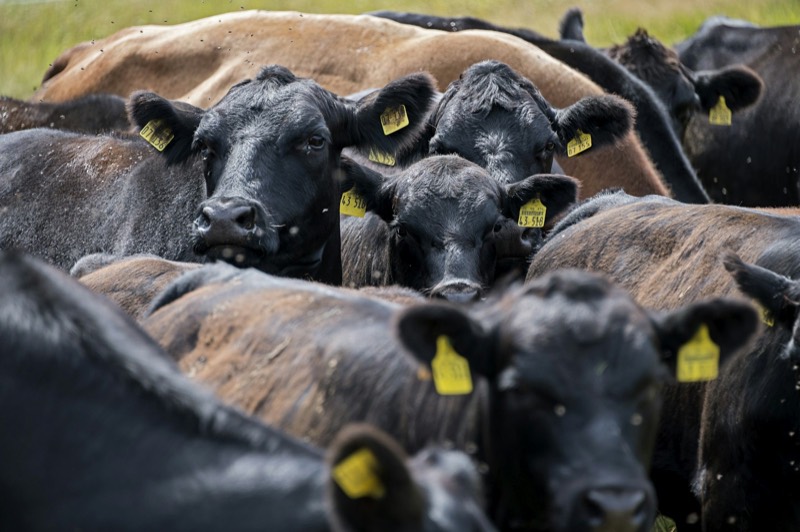
The test. An ear notch, the size of a pencil eraser, in a tube. Antigen-capture ELISA or PCR at the lab, $3 to $8 a head. Do it on every calf at branding or weaning. A calf that tests negative once is negative for life; it cannot become PI later. A positive calf gets retested in three weeks to rule out a transient infection; if still positive, it is PI.
What to do with a positive. Cull the calf. Not to a sale barn, where it goes into somebody else's pen; to slaughter, or euthanize it. Then test the dam, because a PI cow produces PI calves every year; most PI calves come from transiently infected dams, who test negative, but the ones that come from a PI cow will keep coming. If you find a PI, test the whole calf crop and every cow that came up open or aborted.
Who to test this fall. All the calves if you have never tested; the herd is not clean until every animal has been tested once. After that, test the calves every year. Replacement heifers you buy, and their calves. Any animal you bring in, before it is in with the herd.
Vaccination is not testing
Both diseases have a vaccine piece, and both vaccines are worth using. Neither one replaces the test. A vaccinated herd with an untested bull carrying trich, or an untested PI calf in the replacement pen, is a vaccinated herd with the disease in it. The test finds the source. The vaccine limits the damage while you do.
The cost
A 100-cow herd, all bulls trich-tested and all calves ear-notched, is under $1,000 a year. Ten open cows from trich, at a lost calf apiece, is $16,000 at current prices, plus the cows. This is the cheapest insurance in the article series.
Reporting from Kansas State University Veterinary Diagnostic Laboratory.
Comments
Sign in or create an account to join the conversation.