Stretching hay through a dry winter: what to do before the first hard freeze
If your pasture is short and hay is $30 higher than last year, the decisions that save the most money get made in September, not January. Test your hay, cull now, limit-feed, and know when a cow is cheaper to sell than to winter.
Sep 8
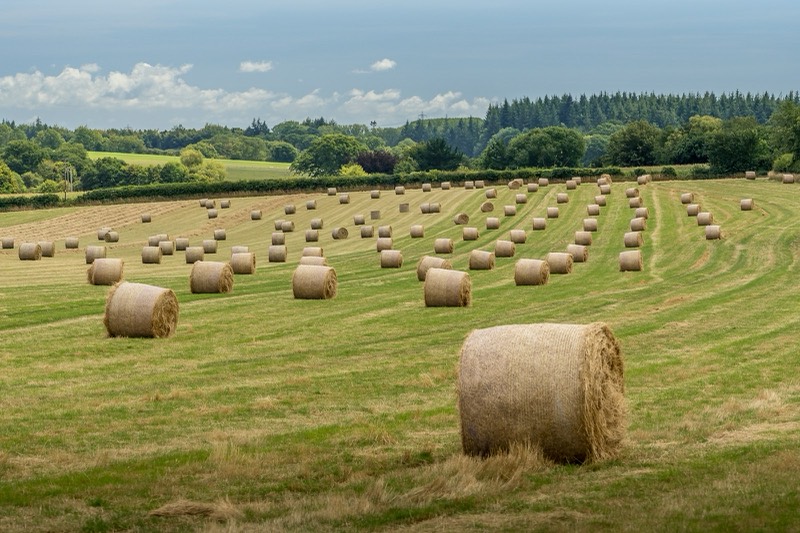
This is written for the producer who came out of the summer with less grass than planned and is now looking at a hay bill that went up while the grass went down. Nothing here is new; extension has been saying it for decades. But it is a checklist worth running before the weather turns.
1. Count what you actually have
Weigh a few bales. Round bales that "should be" 1,200 pounds are often 900, especially in a dry year when hay was cut light. Then count them. Then figure your cows will eat about 2.5 percent of body weight per day in dry matter, more in cold weather, and that you will lose 15 to 30 percent of unwrapped round bales to weather and waste if they are fed on the ground. Do the division. Most people who do this exercise find they are a month short of what they thought.
2. Test it
A forage test costs $20 to $30 and tells you protein and energy. Drought hay is often better quality than you would guess (stressed grass cut early is leafy) or far worse (mature, rained on, or cut late). You cannot supplement correctly without knowing. If the hay is short on protein, a few pounds of distillers or a protein tub is far cheaper than feeding more hay. If it is short on energy, that is a different supplement and a different cost.
NDSU Extension published a good rundown of supplemental forage options in July that is worth reading if you are in the northern Plains.
3. Cull now, while the cull market is strong
Every open cow, every cow with a bad udder or bad feet, every cow that has weaned a light calf two years running is eating hay you do not have. Cull cow prices are historically high right now; they will not be better in February when everyone else is dumping cows. Preg check early and sell the opens the same week.
4. Wean early if you have to
A dry cow eats 30 to 40 percent less than a lactating one. Weaning calves at five or six months instead of seven puts that feed back on the cow, lets her go into winter in better condition, and gets the calves onto feed you can control. Early-weaned calves need a good ration and a good vaccination program, but at this year's prices they are also the most valuable thing on the place, so they are worth the attention.
5. Limit-feed instead of free-choice
Cows fed free-choice from a ring waste hay and eat more than they need. Feeding a measured amount daily, in a bunk or on frozen ground rolled out in a line, cuts waste dramatically. Bale processors help. So do simply moving the ring every feeding. If you can limit-feed a higher-quality hay at 1.8 to 2 percent of body weight instead of free-choice at 2.5 percent plus waste, you have stretched the same stack by a third.
6. Know your break-even on wintering a cow
With hay at $200 a ton and a cow eating roughly two tons over a 150-day winter, you are at $400 in hay alone before supplement, mineral, and labor. Set that against the calf she will wean next fall, and against what she is worth at the sale barn today. For most cows the math still favors keeping her, because a bred cow's calf is worth more than it has ever been. For the bottom 10 to 15 percent of the herd, it usually does not.
7. Look at the alternatives
Corn stalks, if you can rent them and get water to them. Cover crops on a neighbor's harvested ground. Ammoniated wheat straw. Cotton gin trash in the south. None of it is as easy as a bale of good hay, and all of it is cheaper this year.
The worst outcome is running out in February, when hay is $50 higher than it is now and there is no grass for ninety days. Do the count in September.
Comments
Sign in or create an account to join the conversation.