The first frost turns sorghum-sudan and johnsongrass into poison for a week. Nitrates never leave.
Prussic acid spikes in sorghum-family forages after a frost and in any regrowth for weeks after. Nitrates build in drought-stressed corn, sorghum, and small grains and do not go away with time or frost. The rules for grazing and haying through October, and the test that costs less than one cow.
6d ago
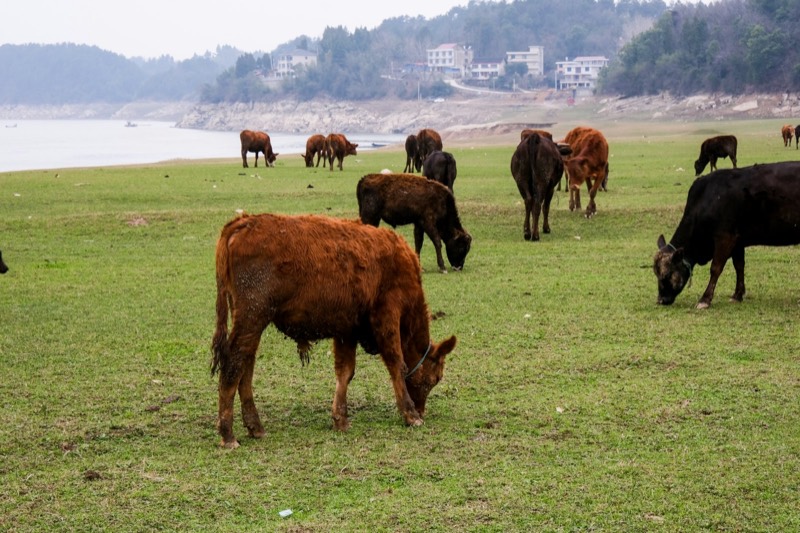
Every October there is a run of calls to the diagnostic labs about cows found dead in a sudangrass field or a johnsongrass patch along the creek, usually within a few days of the first frost, usually a few of the best cows, usually with no warning. It is prussic acid, and it is preventable with a calendar and a fence. The second problem, nitrates, is quieter, slower, and this year, after a dry summer, more widespread.
Prussic acid
What it is. The sorghum family, sorghum-sudangrass, sudangrass, forage sorghum, grain sorghum stubble, johnsongrass, and to a lesser degree shattercane and some millets, contains a compound that becomes hydrogen cyanide when the plant cell is damaged. Frost damages the cells. So does drought, grazing, and any wilting. The cyanide is highest in young leaves, regrowth, and frosted tissue, and it kills fast: minutes to an hour, the animal gasps, staggers, and goes down. Treatment exists but you are rarely in time.
The rules.
- Do not graze sorghum-family forage for 7 to 10 days after a killing frost, and not until the frosted material has fully dried and turned brown. A light frost that only nips the tops is worse than a hard freeze, because the plant keeps living and the damaged leaves stay toxic.
- Regrowth after a frost is the most dangerous forage on the place. New tillers from the base after a frost are loaded. If the field frosts, then warms up and regrows, stay off it until a hard freeze kills everything, and then wait another week.
- Do not turn hungry cattle into it. Fill them up on hay first. The dose matters, and a hungry cow takes a big dose fast.
- Height rules for the season: do not graze sudangrass under 18 inches or sorghum-sudan under 24 inches at any time. The young plant is the toxic one.
- Johnsongrass in the fence rows and creek bottoms follows the same rules. This is the one people forget, because they never planted it.
Hay and silage are safe. Prussic acid is a gas and it leaves as the forage dries or ferments. Sorghum-family hay that is fully cured, and silage that has fermented three weeks or more, can be fed without worrying about cyanide. That makes haying or chopping the safest way to use a frosted field.
Nitrates
What it is. Plants take up nitrate from the soil and normally turn it into protein. Under drought, cloud, cold, or after a frost, or when heavily fertilized, the plant takes up nitrate faster than it uses it and stores it in the lower stalk. In the rumen, nitrate becomes nitrite, which stops the blood from carrying oxygen. Death is slower than cyanide, hours rather than minutes, with a brownish blood color, and the survivors often abort.
The plants: corn, especially drought-stressed corn chopped or grazed, sorghum family, oats, wheat, rye and other small grains, millet, and weeds like pigweed, lambsquarter, and kochia.
Nitrates do not go away. Not with frost, not with time, not with drying. Hay made from high-nitrate forage is high-nitrate hay forever. Silage fermentation reduces nitrates by a third to a half, which is the one real fix.
The test. A forage sample to the lab for nitrate, $10 to $20. Labs report it several ways, which is where people get confused; ask for it as percent nitrate (NO3) on a dry matter basis and use these thresholds:
- Under 0.5 percent: safe.
- 0.5 to 1.0 percent: feed with caution, blend to under half the ration, do not feed to bred cows or as the only feed.
- 1.0 to 1.5 percent: dangerous, limit to a quarter of the ration, and only for open, non-breeding animals.
- Over 1.5 percent: do not feed.
If the lab reports in ppm of nitrate-nitrogen (NO3-N), multiply by 4.4 to get ppm nitrate, and divide by 10,000 to get percent. A bale that is 2,300 ppm NO3-N is about 1 percent nitrate and belongs in the caution group.
Field tests exist, a diphenylamine spot test on a split stalk, and they will tell you whether nitrate is present in a hurry. They will not tell you how much. Use them to decide whether to send the sample, not whether to feed.
The drought-year rule
Test everything you cut or grazed under stress this summer. That includes the corn that was salvaged for silage, the sorghum-sudan that was hayed short, the oats that were planted for fall grazing on a field that got a lot of manure, and the weedy patches. Raise the stalk cutter to leave the bottom 8 to 12 inches, which is where most of the nitrate is, and make silage instead of hay when you can. Then feed the tested high stuff blended with tested clean stuff, to open cows, in the middle of the day, with the cattle already full of something else. One cow is worth more than every test you will run this year.
Reporting from Oklahoma State University Extension.
Comments
Sign in or create an account to join the conversation.