Preg check at weaning, sell the opens the same week
An open cow eats $400 of hay this winter and gives you nothing in April. With cull cow prices near record highs and hay short, the fall preg check is the single most profitable hour you will spend in the chute this year.
Sep 11
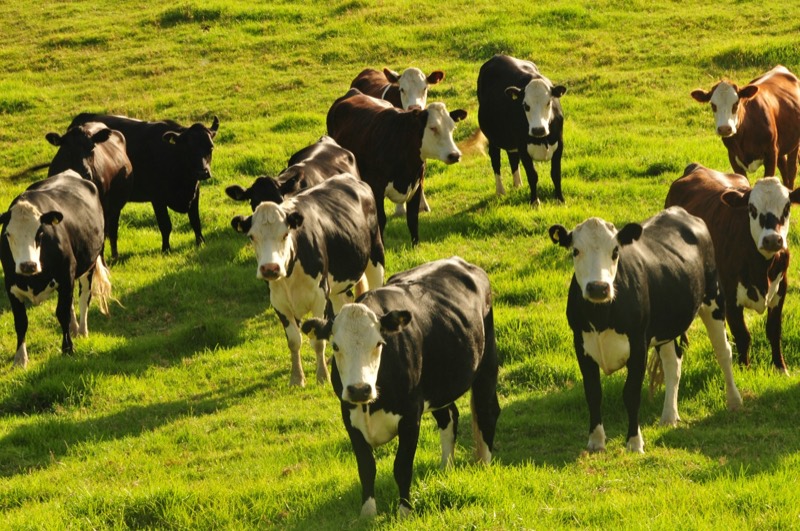
Somewhere between 5 and 10 percent of the cows in a typical spring-calving herd are open after a 60- to 90-day breeding season. If you do not preg check, you find out in April, after feeding them all winter. If you do, you find out at weaning, when a cull cow is worth more than she has ever been and hay is worth more than it has been in years.
The math
Take a 1,300-pound open cow.
- Wintering her: roughly two tons of hay at $180 to $200 a ton, plus mineral, supplement, and labor. Call it $400 to $500 through April.
- Her value in October: cull cow prices have run historically high all year on the beef-trim shortage. A 1,300-pound cow at $1.40 to $1.60 a pound is $1,800 to $2,100.
- Her value in April, if she is still open: the same cow, lighter, in a seasonally weaker cull market, minus the winter feed.
Culling her in October rather than April is worth $500 to $700 a head. On a 100-cow herd with 7 opens, that is around $4,000, for the cost of a vet call.
Seasonality matters too. Cull cow prices are typically strongest in late summer and fade 5 to 10 percent into October and November as the whole country culls at once. If you can preg check in September rather than late October, you sell into a better market.
The methods
- Palpation. A skilled veterinarian can call a pregnancy from about 35 to 40 days. Fast, cheap, and gives you a rough stage.
- Ultrasound. Detects earlier (28 to 30 days), can sex the fetus and age it more precisely, and can spot problems. Costs a bit more per head and needs the right chute setup.
- Blood test. Draw a tube, mail it, results in a few days. Accurate from 28 days post-breeding. Best for people without easy vet access or a good chute, and increasingly the cheapest per head. The catch: it cannot stage the pregnancy and cannot tell you if a cow has lost the calf since the sample.
Any of them beats not doing it.
Who else goes on the truck
While every cow is in the chute, score her for the other reasons she should leave:
- Age and mouth. A broken-mouth cow does not winter well on stockpiled forage or poor hay.
- Feet and legs, udder, disposition. These do not get better.
- Late breeders. A cow bred in the last 20 days of the season calves late, weans a light calf, and is more likely to be open next year. In a drought year with short feed, culling the tail end of the calving distribution is one way to cut cow numbers without cutting your best cows.
Then sell them right
Do not run culls straight from the pasture to the sale barn thin. Sorted, healthy, fleshy cull cows sell as "boning" or "breaking" utility and bring a premium over "lean." If you have cheap feed, 30 to 60 days on it before selling can pay well. If you do not, and this year a lot of people do not, sell them now and take the check. SDSU Extension's cull cow guidance walks through the grade categories and what packers are paying for.
Reporting from SDSU Extension.
Comments
Sign in or create an account to join the conversation.