The last 90 days before calving are when the ration matters. What a bred cow actually needs.
A dry cow in mid-gestation gets by on almost anything. The same cow in the third trimester needs a quarter more energy and more protein, and if the hay does not have it, the calf gets it from her back. The numbers for a 1,300-pound cow, how to hit them with hay and a supplement, and the two mistakes that cost you next year's calf.
Oct 11
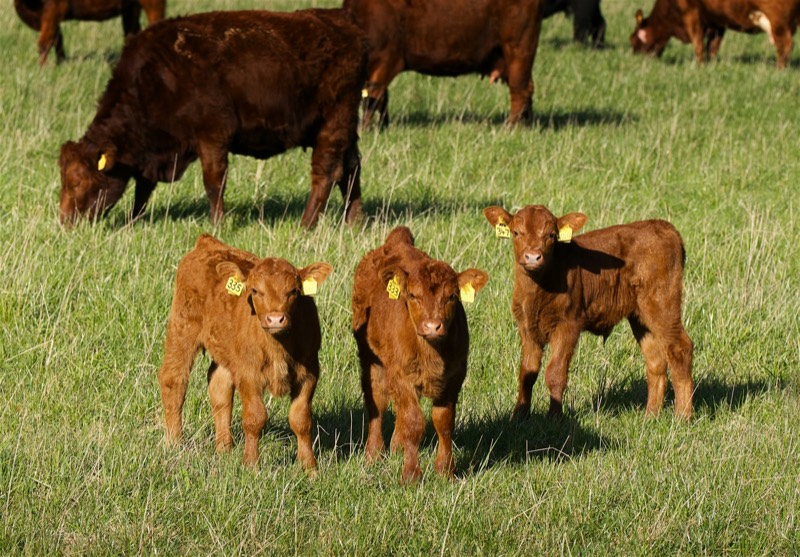
For most of the fall a dry, bred cow is the easiest animal on the place to feed. Her calf is weaned, the one inside her is small, and she will hold condition on poor hay and stockpiled grass. Somewhere around the first of the year for a March-calving herd that changes. Seventy percent of the calf's birth weight is put on in the last 90 days, the cow's own maintenance goes up with the cold, and the feed that carried her through November stops being enough.
What she needs
The standard numbers, for a 1,300-pound mature cow in moderate condition, on a dry matter basis:
- Mid-gestation (months 4 to 6): about 7 percent crude protein, 50 percent TDN, eating around 2 percent of body weight, or 26 pounds of dry matter.
- Late gestation (last 90 days): about 8 percent crude protein, 55 to 58 percent TDN, eating around 2.2 percent of body weight.
- Early lactation (first 90 days after calving): 10 to 11 percent crude protein, 60 to 62 percent TDN, eating 2.5 percent or more.
The jump from mid to late gestation is roughly 20 to 25 percent more energy. Add cold stress, which raises maintenance about 1 percent for every degree the wind chill drops below 20 degrees for a cow in a dry winter coat, and a January cow in Nebraska can need a third more than she did in October.
What the hay has
This is why the forage test matters. Typical numbers from the tests coming through the labs this year:
- Good first-cutting grass hay: 9 to 11 percent CP, 55 to 58 percent TDN. Meets late gestation on its own.
- Mature, rained-on, or late-cut grass hay: 6 to 8 percent CP, 48 to 52 percent TDN. Meets mid-gestation, does not meet late gestation.
- Cornstalks, standing or baled: 4 to 6 percent CP, 45 to 50 percent TDN. Needs protein and energy in late gestation.
- Alfalfa or alfalfa-grass mix: 14 to 18 percent CP, 58 to 62 percent TDN. More than enough; blend it.
If your hay is in the second group, which a lot of drought-year hay is, the cow is short about 1 pound of protein and 2 to 3 pounds of TDN a day in late gestation. She makes it up by burning her own fat, and the body condition score you took at weaning goes from a 5 to a 4 right when it needs to be a 5.
Filling the gap
The cheapest fix depends on what is short.
- Short on protein, not energy: a pound or two a day of a 30 to 40 percent protein cube, distillers grains, or a lick tub. Protein supplement also increases how much of the low-quality hay she can digest, which picks up some of the energy gap for free.
- Short on both: 3 to 5 pounds of corn, distillers, or a blend, or swap in a better hay for part of the ration. Corn alone at more than 4 or 5 pounds a day on a low-quality hay ration starts depressing fiber digestion and can make things worse; distillers grains do not have that problem and bring protein along.
- Short on energy, hay is decent: a few pounds of corn, or simply more hay, if she has bunk space and the hay is good enough that she will clean it up.
Work it out per cow per day and multiply. A 100-cow herd that needs 2 pounds of distillers a day for 90 days is 9 tons, and at current prices that is a few thousand dollars against a calf crop worth $200,000. It is not the place to save.
Two mistakes
Feeding the thin cows with the fat ones. A cow that scored a 4 needs more than a cow that scored a 6, and if they are in the same pen the 6 gets it. Sort by condition at preg-check and feed the thin group and the heifers separately. First-calf heifers are still growing themselves; feed them like the thin group even if they look fine.
Waiting until she looks thin. A cow losing condition under a winter coat does not look thin until she is a 3, and a cow that calves at a 3 or 4 will be late to breed back or open. The time to put condition on her was October, and the time to at least stop the loss is now. Every point of condition she loses between now and calving costs you about 20 to 30 days of breeding season next summer.
Reporting from University of Nebraska-Lincoln BeefWatch.
Comments
Sign in or create an account to join the conversation.